PDFDatasheet
Date not verifiedQStar Object Storage Manager Overview
Object and S3-compatible access to archive storage tiers.
- Vendor:
- QStar
- Date:
- 2019
- Format:
- Size:
- 798 KB
The tier you read from
Disk and object archive systems sit between primary storage and cold media. The design question is rarely how many terabytes. It is whether applications reach the data through a filesystem path or an S3 bucket.
Configurations are quoted against your access pattern and namespace size, not against a headline capacity figure.
Every archive has a tier where data still has to come back quickly. A radiologist opening a prior study, a rendering job pulling source frames, an investigator pulling three months of camera footage: none of these tolerate a robot fetching a cartridge. That tier is built from disk, usually presented as an object store, and it is the most expensive part of an archive per terabyte. Getting its size and its access model right is what keeps the rest of the design affordable.
Erasure coding trades overhead for rebuild behaviour.
The same hardware gets bought for four quite different reasons, and the correct configuration differs in each case.
Confusing the cache case with the active archive case is the most common sizing error we see. A cache can be small and fast. An active archive has to hold the whole working set or it behaves like neither one thing nor the other.
A filesystem is a tree. Every lookup walks directory entries, and metadata operations queue behind each other. That model is fine at millions of files. At hundreds of millions it becomes the bottleneck long before the spindles do, and backup, indexing and antivirus scans of the namespace stop completing in a working day.
Object storage discards the tree. Objects sit in a flat namespace inside buckets, addressed by key, with arbitrary user metadata attached to each object. Listing and lookup costs stop tracking directory depth, and the metadata you need for retrieval travels with the data instead of living in a separate database that can drift out of step.
The practical argument for object access is integration. Applications that speak S3 can write straight to the archive without a mapped drive, a mount point or an agent. QStar's product line reflects both routes: Kaleidos is an S3-compliant distributed object platform that scales across nodes and can extend the object store onto tape and commercial cloud, while the S3 Application Gateway takes storage already presented over SMB and NFS and exposes it as buckets, so an S3-native application can use infrastructure that was never built for it.
File access is still the right answer in three situations. When the writing application only knows SMB or NFS and will not be changed. When users need to browse the archive in a file manager as part of the workflow. And when an existing HSM or archive manager already presents a namespace that your operational procedures are written around. QStar's Object Storage Manager sits deliberately in this space, offering CIFS and NFS shares over an object engine with a REST API alongside, so the access method is a presentation choice rather than an architectural commitment.
| File access | Object access | |
|---|---|---|
| Namespace behaviour | Degrades as directory counts grow | Flat, scales with metadata index |
| Application integration | Mount point or share | S3 API call |
| Metadata | Limited to filesystem attributes | Arbitrary key-value per object |
| Typical fit | Existing workflows, user browsing | New applications, large namespaces |
| Retention control | Filesystem or appliance-level | Per-object lock semantics |
Writes land fast. Cold reads do not.
Two mechanisms protect data on a disk tier, and they trade different things.
Replication keeps whole copies. Three copies of an object means three times the raw capacity for one usable terabyte, and the recovery path is a straight read from a surviving copy. It is simple, it is fast to repair, and it is expensive.
Erasure coding splits an object into k data fragments and adds m parity fragments, distributing all k+m across failure domains. Any k fragments reconstruct the object. As an illustration only, a 10+4 scheme carries 40% overhead and survives four simultaneous fragment losses, where triple replication carries 200% overhead to survive two. That is the whole appeal: better failure tolerance per terabyte purchased.
The cost is on the recovery path. Rebuilding a replicated copy is a copy operation. Rebuilding an erasure-coded fragment means reading k fragments from across the cluster and recomputing, which consumes network and CPU while the system is already degraded.
This is why the advertised durability figure deserves scepticism. Vendors quote durability as a probability derived from an assumed rebuild window. Double the time to rebuild, because the drives are large, the cluster is busy or the replacement disk arrived a week later, and the exposure window doubles with it. Ask instead how long a full rebuild of your largest drive size takes under production load, and whether the system throttles rebuild to protect client I/O. QStar describes Kaleidos, for example, as combining distributed copies with erasure coding and repairing without taking the service down. That is the behaviour to put under test during commissioning, rather than the durability number to accept on paper.
S3-compatible archive storage can expose Object Lock, which applies a retain-until date or a legal hold to an object version. Where it is available it is the cleanest retention control at this tier, because the rule attaches to the object rather than to a share permission that an administrator can change.
Two cautions. Object Lock is not universally implemented across S3-compatible products, and governance mode permits privileged override by design, so the mode matters as much as the feature. And a retention lock on disk still lives on rewritable media under one administrative domain. It reduces the risk of deletion by a compromised account. It does not give you the media-level write-once property described on our WORM storage appliances and optical archive systems pages.
INCOM Storage supplies archive storage systems under the StorEasy and HIT brands. These are one supplier and one product line, not two vendors. The HIT name covers the HMS archive storage series and a separate HDL line, and we do not publish capacities, media types or model designations for either, because the documents in circulation do not agree closely enough to be quoted.
Where a design calls for HDL specifically, we qualify it further. The published documentation for HDL is noticeably thinner than for HMS, so we confirm the current specification, drive options and support terms with INCOM before it appears in a proposal rather than quoting from a datasheet. That check happens before pricing, not after.
The disk tier should be sized against behaviour, not against total archive size. Three inputs settle it in most engagements: peak ingest rate over a sustained window, the proportion of reads that land on data written in the last 90 days, and the largest single restore anyone will realistically request. From those, the working set falls out, and everything below it belongs on cheaper media managed by the software described under archive management software.
If most reads are recent, the disk tier can be a fraction of the total and the economics work. If reads are uniformly distributed across a decade of data, disk is doing the whole job and you should be honest about that in the budget. See long-term data archiving for how the tiers combine, backup and recovery storage for the repository case, and research, AI and HPC for the read-heavy end of the spectrum. Other technology options are listed on the technologies overview.
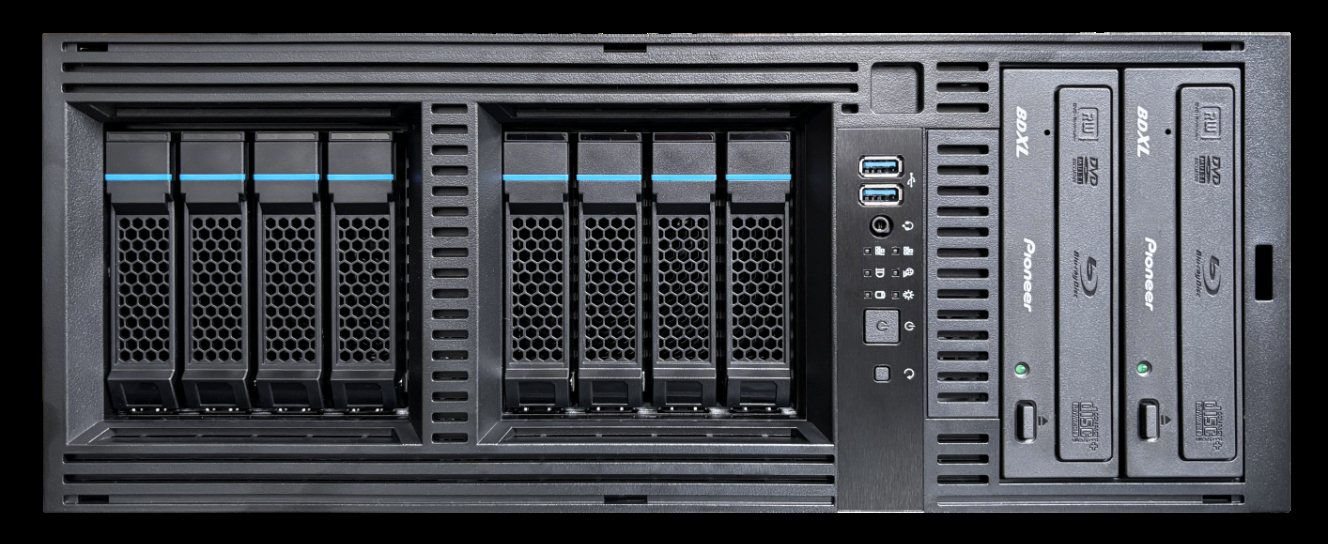
Manufacturer documentation relevant to this page. Availability, specifications, and configurations are subject to verification.
Object and S3-compatible access to archive storage tiers.
S3-compatible application access to archive storage.
Object-storage platform overview for archive and content workloads.
HIT HMS archive storage series. Confirm current models, capacities, and support for the proposed configuration.
No. Object access wins on namespace scale and application integration, and it is the right default for new workloads and very large file counts. But if your archiving application only speaks SMB or NFS, an object store behind a file gateway adds a layer without adding much. Choose object when something will actually call the S3 API, or when directory-tree performance is already a measured problem.
Share the workload, capacity, retention, access, and resilience requirements. Aban Smart will identify the next discovery inputs and the appropriate engagement path.